




Interference of acoustic waves is a phenomenon that is greatly influenced by acoustics and the properties of the room. The interference of acoustic waves involves the creation of a new spatial distribution of sound wave amplitudes, meaning their attenuation and amplification. This occurs as a result of the overlap of at least two waves, which can reflect off the walls of the room. The scale of wave interference is affected by the room’s construction, the location of the sound source, environmental conditions, and the frequency of the acoustic waves.
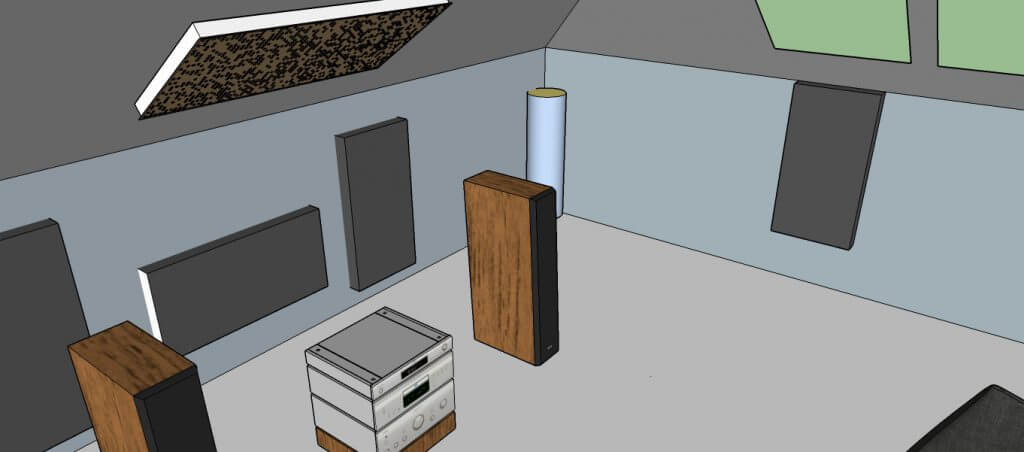
When acoustic waves meet and amplify each other, the loudness of the sound also increases. Such places are referred to as ‘peaks.’ Areas where the acoustic waves weaken due to interference are called ‘nodes.’ The interference of acoustic waves can have negative effects when creating or listening to music, and this will be most noticeable at low frequencies and bass tones. This can lead to a booming of low tones. Interference can be reduced through proper acoustic preparation of the room and the use of additional devices.