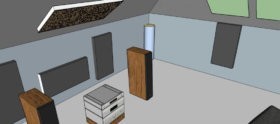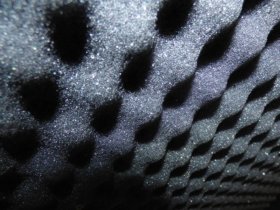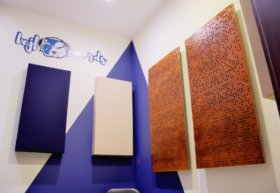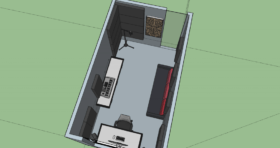
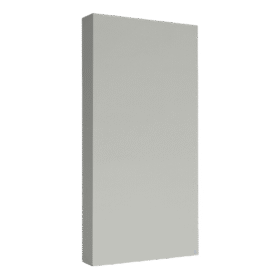
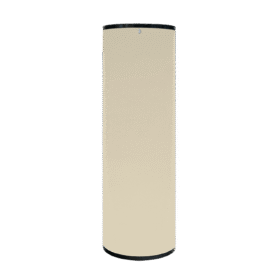
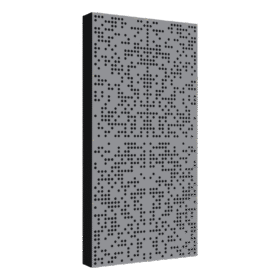
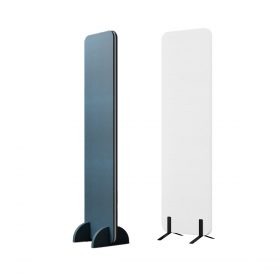
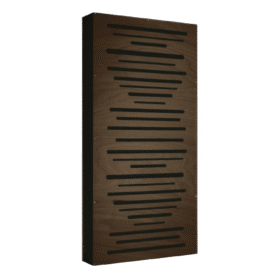

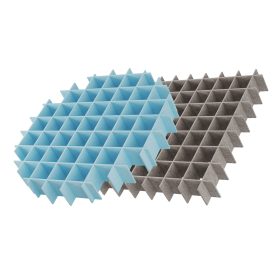
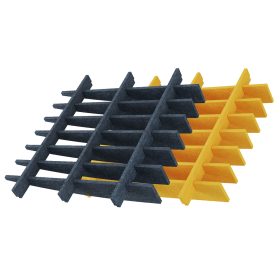

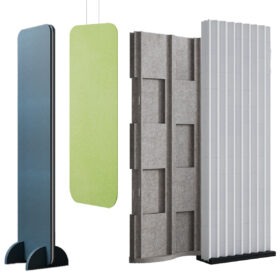

Sound absorption is the ability to absorb or take in sound through specific surfaces. It is represented by coefficients that describe the capacity of a given object to absorb sound. Frequency variations are also taken into account, as higher frequencies will change the sound absorption characteristics. It is also important to emphasize that each material will have different parameters regarding the absorption of propagating acoustic waves.
Currently, in Poland, sound-absorbing materials are classified from A to E, where A is the highest possible standard. Sound waves are absorbed by physical bodies, which weakens the energy of the sound wave while increasing the internal energy of the sound-absorbing body. Very often, sounds are absorbed as a result of the friction of the acoustic wave against the surface of a barrier. In this context, the porosity of walls or dedicated acoustic structures, including sound absorbers and sound traps, can be utilized. The higher the frequency of the acoustic waves, the greater the interaction of the device.
The sound absorption scale is very important for acousticians who prepare concert halls, theaters, lecture rooms, or cinemas. Skillful arrangement of the room and the use of additional accessories can significantly influence the sound-absorbing properties of the space.